
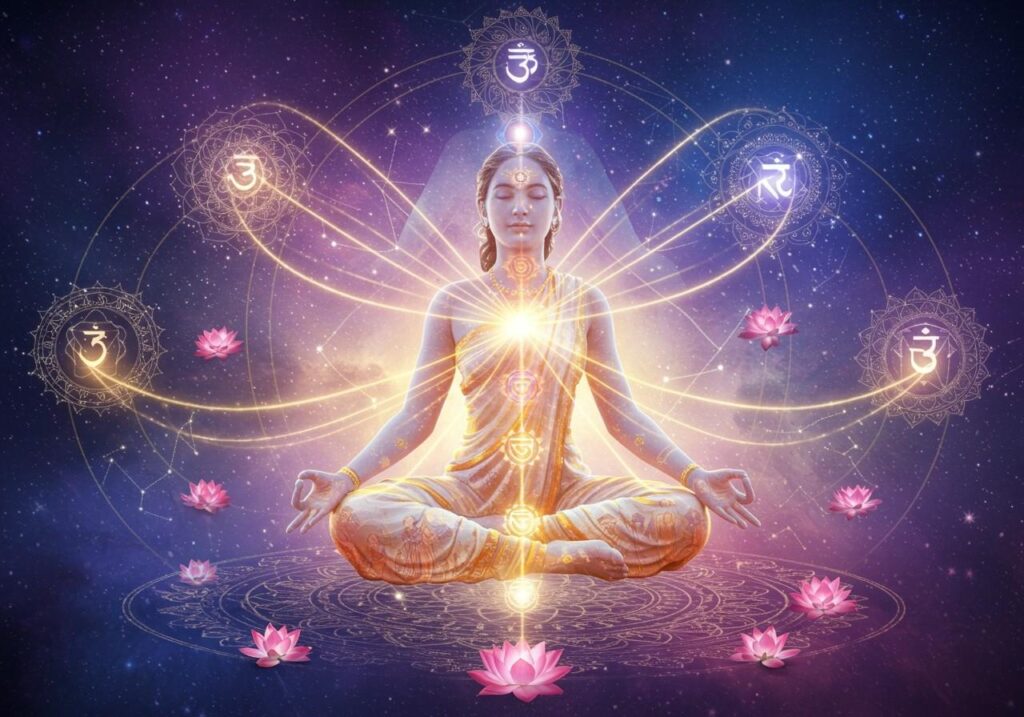
Psychology & Spirituality: Exploring the Mind Beyond the Self
(20ᵗʰ November 2025)
What is the true meaning of spirituality?
Psychology sees spirituality differently than it is often understood to be religious or mystical. Spirituality, from a psychological standpoint, is the quest for purpose, significance, and connection outside oneself. It mostly comprehends itself as a component of a bigger entity, be it humanity, the cosmos, or nature.
Viktor Frankl and Carl Jung, among other researchers, viewed spirituality as a fundamental human need rather than merely a set of beliefs. It has a significant impact on emotional well-being, self-awareness, and resilience.
1. The Psychological Basis of Spirituality
Spirituality is linked to cognitive functions in contemporary psychology, such as:
Self-transcendence: overcoming a mind that is solely focused on oneself.
Mindfulness & Awareness: being completely present without making any judgments.
Purpose & Meaning: comprehending life outside of material objectives.
Spirituality serves as a protective factor against anxiety and depression by improving emotional control and life satisfaction, according to Positive Psychology.
2. The Human Mind and Spiritual Development
Our psychological development is reflected in our spiritual development. When we develop spiritually: Our ego loses its hold. We learn empathy, forgiveness, and acceptance. We shift our focus from fear-based to love-based comprehension.
According to psychologist Abraham Maslow’s hierarchy of needs, “self-transcendence” is higher than self-actualization, since it highlights that true fulfillment comes from dedicating oneself to something larger than oneself.
3. The Connection between Mental Health & Spirituality
There are many studies that demonstrate the benefits of spiritual activities such as prayer, meditation, and thankfulness: lower levels of stress hormones (like cortisol), Boost emotional resilience, Boost empathy and life satisfaction,
This is also supported by neuroscience: MRI studies show that regular meditation improves the prefrontal cortex, which is the area of the brain that controls empathy, emotion regulation, and decision-making.
4. Examining Psychological Perspectives on Spiritual Practices
This is how psychology and spirituality coincide in daily practice:
- Psychological Benefits of Spiritual Practice.
- Meditation fosters mindfulness and lowers anxiety.
- Gratitude reconfigures the mind for optimism.
- Providing service to others helps one develop empathy and find meaning.
- Self-awareness is increased by reflection and silence.
- Nature interaction fosters grounding and lowers stress.
The purpose of these behaviors is to promote mental clarity and emotional stability, not to practice religion.
5. Psychological Change as a Result of Spiritual Awakening
A spiritual awakening frequently resembles a psychological rebirth, in which old ideas and attachments break down, causing distress before change. Psychologists refer to it as an ego-death process, in which the mind confronts its delusions. Despite the initial perplexity or worry it may cause, it ultimately leads to inner freedom and peace.
Conclusion
Bringing the Mind and Spirit Together. The relationship between spirituality and psychology is complementary rather than conflicting. Spirituality aids in transcending the mind, whereas psychology helps in comprehending it. They combine to form a comprehensive route to mental health, emotional stability, and inner serenity.
“Being who you truly are is the greatest opportunity you will ever have in your life,” – Carl.